

AI-driven and Autonomous Cybersecurity
Designing closed-loop autonomous cybersecurity systems that continuously perceive threats, reason under uncertainty, and take adaptive defensive actions with minimal human intervention.
DCAILab
Building secure, privacy-preserving, and intelligent systems at the intersection of decentralized cybersecurity and artificial intelligence to protect critical infrastructures.

Our Focus
Our work spans critical areas of cybersecurity and Artificial Intelligence, focusing on building robust, privacy-preserving systems for healthcare, industrial IoT, and smart environments.
Designing closed-loop autonomous cybersecurity systems that continuously perceive threats, reason under uncertainty, and take adaptive defensive actions with minimal human intervention.
Studying the security, reliability, and controllability of agentic and autonomous AI systems, including adversarial manipulation, unsafe emergent behavior, verification, and deployment-time guarantees.
Developing federated and decentralized learning systems that enable cross-organizational collaboration while addressing trust, robustness, auditability, and adversarial behavior.
Designing secure and auditable machine unlearning frameworks that enable the selective removal of data, knowledge, or behaviors from AI systems. Our research explores federated unlearning, agentic AI unlearning, privacy compliance, machine forgetting, verifiable deletion, and trustworthy post-deployment AI governance.
Designing privacy-preserving learning frameworks with formal guarantees for sensitive domains, integrating differential privacy, secure computation, and cryptographic safeguards into real-world AI systems.
Protecting cyber-physical and industrial IoT systems through AI-driven detection, adaptive defense, and resilient control mechanisms for critical infrastructure.
Integrating AI-driven threat intelligence with governance frameworks that support explainability, accountability, and coordinated decision-making in security operations.
Studying the security and trustworthiness of blockchain-enabled autonomous agents in Web3 ecosystems, focusing on adversarial behavior, economic manipulation, and governance.
Active Research
Ongoing funded and collaborative projects at DCAILab focused on trustworthy AI, federated learning, cybersecurity, privacy-preserving systems, and AI governance.
This NCC-funded project develops an AI-driven cybersecurity forecasting platform capable of simulating advanced cyberattacks, including zero-day exploits and ransomware campaigns. The platform combines generative AI, adversarial simulation, multi-agent attacker-defender modeling, and adaptive cyber risk analytics to help organizations proactively understand, quantify, and mitigate emerging cyber threats before they materialize.
This SSHRC-funded collaborative project studies human trust, accountability, and decision-making when people use AI for cybersecurity in critical infrastructure. The project centres on human–AI interaction: how people come to trust AI-supported security decisions, and how accountability is maintained when AI is part of the decision.
Strengthening Societal Resilience through Inclusive AI Governance and Capacity Building for the Global Majority. The project develops federated AI architectures for health and climate applications, privacy-preserving machine learning safeguards, AI governance tools, risk monitoring frameworks, and policy recommendations.
About Us
The Decentralized Cybersecurity and Artificial Intelligence Lab (DCAILab) is dedicated to advancing the frontiers of secure and intelligent systems.
Our research combines cutting-edge AI techniques with robust cybersecurity frameworks to address the most pressing challenges in protecting critical infrastructures.
We focus on developing privacy-preserving machine learning algorithms, secure federated learning systems, and autonomous cybersecurity solutions that can defend against sophisticated threats while maintaining user privacy and system integrity.
Our interdisciplinary approach brings together expertise in artificial intelligence, cryptography, distributed systems, and cybersecurity to create innovative solutions for healthcare, industrial IoT, smart cities, and emerging Web3 technologies.

Our Team
Our diverse team of researchers, engineers, and students working together to advance cybersecurity and AI.

Principal Investigator
PI – Lab Director
Leading research in decentralized AI and cybersecurity for critical infrastructure.

PhD Student, University of Calgary
Research focusBlockchain and Decentralized AI

MSc Student, University of Regina
Research focusCybersecurity and AI Context Drift
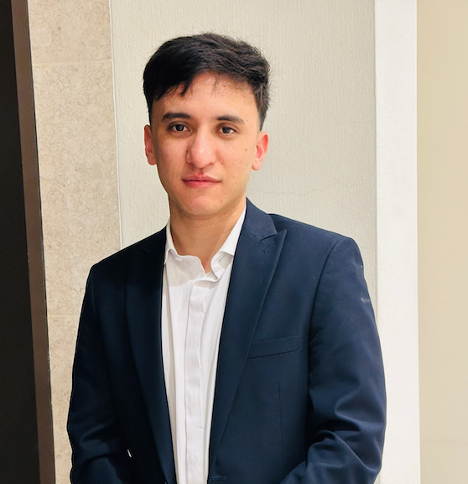
MSc Student, University of Regina
Research focusCybersecurity and AI

MSc Student, University of Regina
Research focusShadow AI Security
PhD Student, University of Regina
Research focusAgentic AI Security
View open positionsMSc Student, University of Regina
Research focusApplied AI-Driven Cybersecurity
View open positionsPostdoctoral Research Fellow, University of Regina
Research focusQuantum-AI Cybersecurity for Critical Infrastructure
View position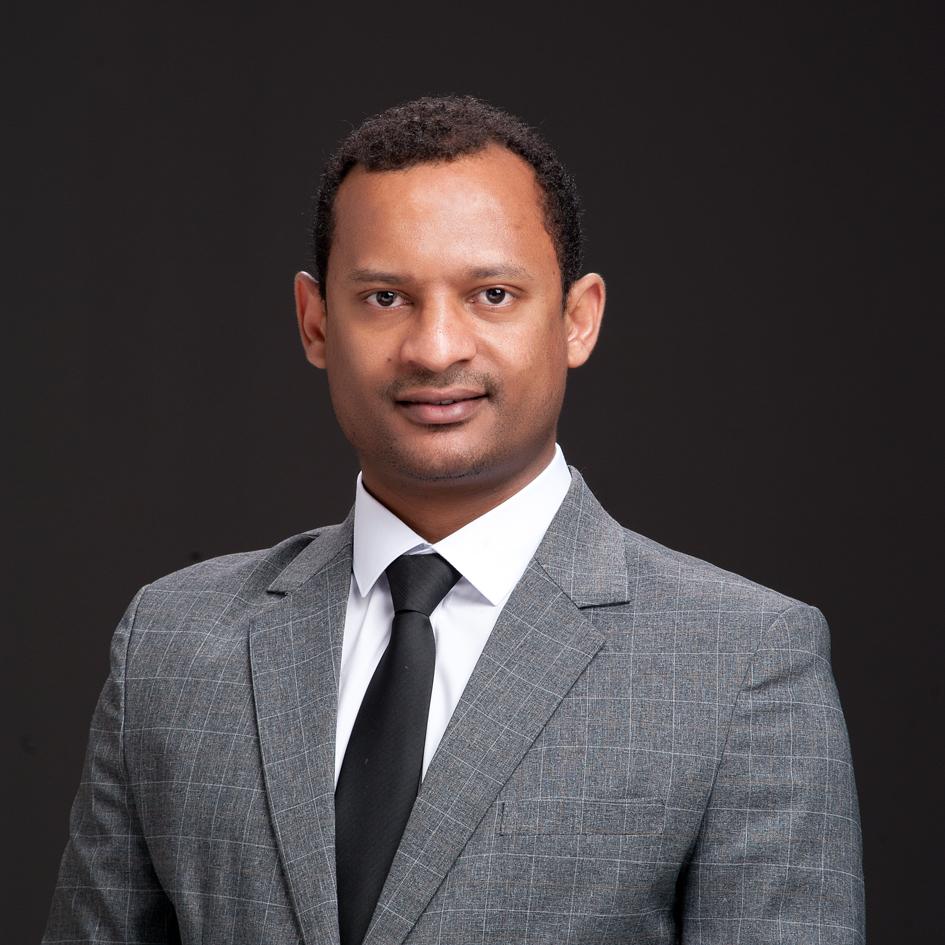
Research Collaborator
Dalla Lana School of Public Health, University of Toronto
Research focusAI for Health & Health Informatics

Research Collaborator
Balsillie School of International Affairs, University of Waterloo
Research focusAI Governance

Research Collaborator
University of Toronto
Research focusAI for Methane Monitoring & Environmental Modelling

Research Assistant
DCAILab
Research focusMemory Attack Surfaces in AI Agents: Poisoning, Injection & Leakage
Publications
Explore our latest research contributions to the fields of cybersecurity and artificial intelligence.
Citation metrics from Google Scholar · updated November 9, 2026
Academic Activities
Invited talks, panels, and public engagement activities by DCAILab.
Balsillie School of International Affairs
IEEE Control Systems Society (CSS) — Rising Star Symposium on Cyber-Physical Systems Security, Resilience, and Privacy
The IEEE Signal Processing Society
Technology Governance Summer School, Balsillie School of International Affairs (BSIA)
Join DCAILab
We are recruiting highly motivated students to work on cutting-edge research in Agentic AI, Federated Learning, and Cybersecurity for Critical Infrastructure.
Join a research project on Quantum-AI Cybersecurity for Critical Infrastructure, spanning quantum computing, AI, and post-quantum cybersecurity.
Appointment: One year, potentially extendable by up to two additional years, subject to performance and funding.
Research topics include Agentic AI security, privacy-preserving machine learning, federated unlearning, and AI governance for critical infrastructure systems.
Work on applied AI-driven cybersecurity projects and contribute to real-world systems involving IoT, smart grids, and decentralized AI.
Lab Updates
Recent highlights including publications, invited talks, workshops, grants, and student achievements.
Upcoming Session
Join an interdisciplinary discussion bringing together experts from academia, industry, law, public policy, healthcare, and technology to examine secure system design, privacy-preserving architectures, ethical responsibility, legal accountability, human oversight, and governance for Agentic AI.
Register for the SessionResearch Opportunities
Selected conferences, workshops, special issues, and book chapters closely aligned with the research interests of DCAILab in cybersecurity, federated learning, privacy-preserving AI, cyber-physical systems, and autonomous security.
The workshop focuses on autonomous and AI-driven cybersecurity systems, agentic security, intelligent threat detection, adaptive defense, cyber resilience, autonomous security operations, and trustworthy AI for cybersecurity.
This collection welcomes original research on privacy-preserving federated learning frameworks for cyber-physical systems, critical infrastructure, industrial automation, smart transportation, industrial IoT, and secure distributed AI.
Student Opportunities
International research internship opportunities at DCAILab, University of Regina, for students interested in artificial intelligence, cybersecurity, privacy-preserving AI, federated learning, autonomous systems, and blockchain security.
Three DCAILab research projects are available through the 2027 Mitacs Globalink Research Internship (GRI) program. Eligible international students can apply to conduct a 12-week research internship at the University of Regina in areas spanning artificial intelligence, cybersecurity, federated learning, privacy-preserving AI, autonomous agents, blockchain, and smart contract security.
Eligibility & ApplyThis project investigates privacy-preserving federated learning techniques for healthcare analytics. The student will explore distributed model training, secure aggregation, differential privacy, and explainable AI using publicly available healthcare datasets.
This project investigates autonomous AI agents for cybersecurity applications. The student will explore machine learning models, large language models, and multi-agent systems for cyber threat analysis, threat hunting, intelligent security decision-making, and incident response.
This project investigates methods for improving blockchain security through smart contract analysis, vulnerability detection, and intelligent monitoring. The student will gain experience with blockchain architectures, smart contract security testing, and AI-assisted vulnerability analysis.
Eligibility Note: The Mitacs Globalink Research Internship is a competitive program for eligible international undergraduate students and students enrolled in eligible combined undergraduate/master’s programs. Eligibility requirements vary by country and institution. Applicants should review the official Mitacs eligibility requirements before applying.
Applicants apply through the official Mitacs Globalink portal. DCAILab does not independently administer or award the Globalink Research Internship.
Get in Touch
Interested in collaboration, joining our team, or learning more about our research?
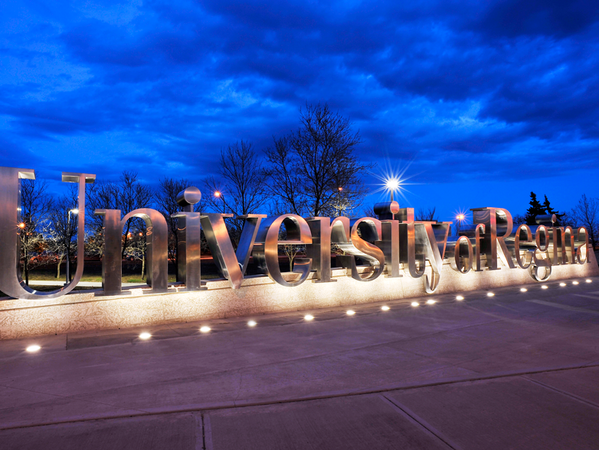
University of Regina
College West, Room CW 308.23
We welcome graduate students, postdocs, and visiting researchers.